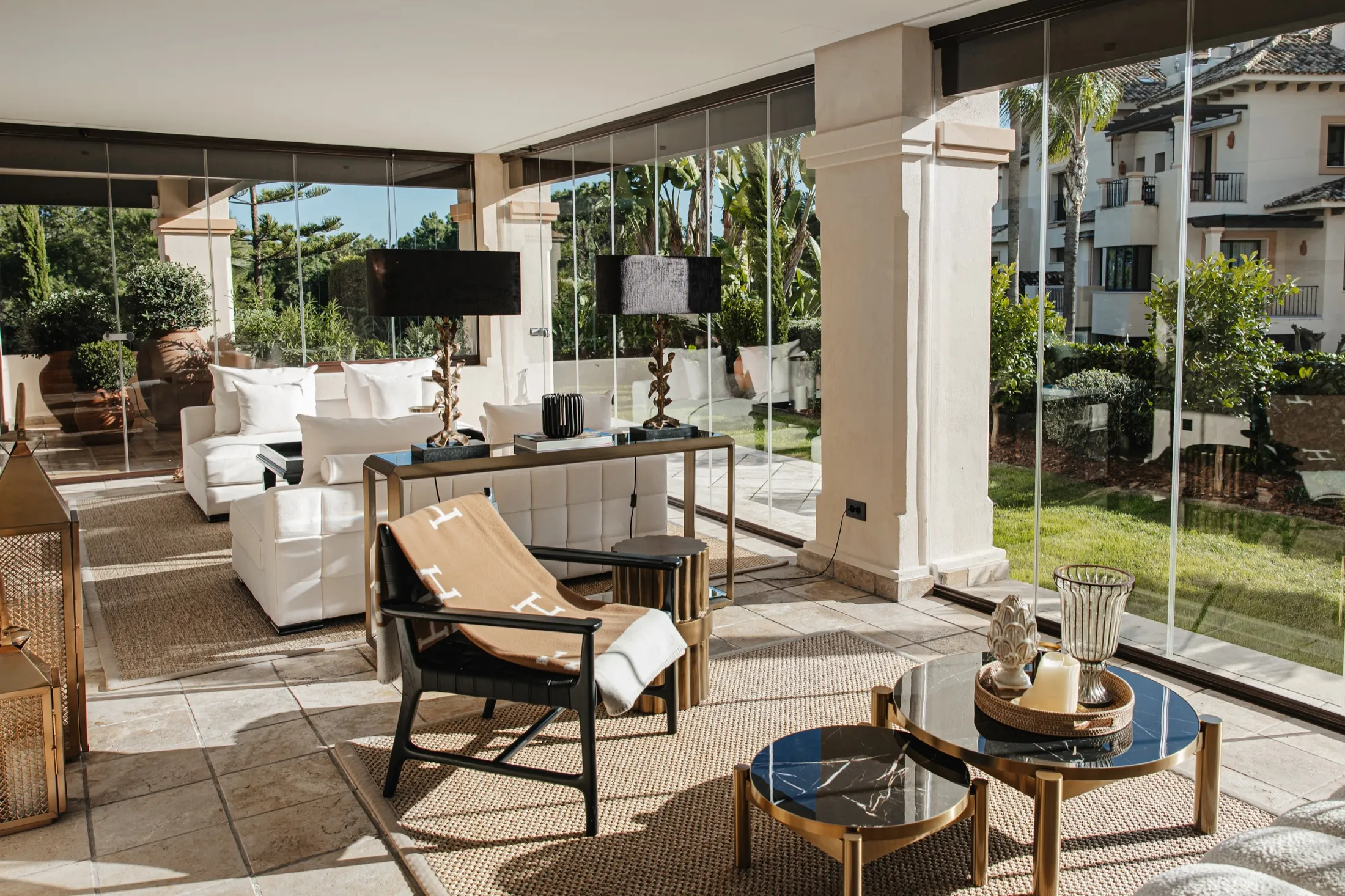
Quick facts: On the Costa del Sol the terrace is used most of the year, not just in summer — so it's designed as a room, not an afterthought. The factors that decide whether an outdoor space lasts are orientation (sun and wind), material choice (UV, heat and salt air), continuity with the interior it opens onto, and whether it was planned for the shoulder seasons and not just August. Get those right and one space works from a February lunch to a midsummer midnight.
Outdoor Living and Terrace Design for the Mediterranean Climate
In our look at 2026 interior design trends in Marbella, indoor-outdoor living came up as the one constant that never goes out of fashion here. It deserves its own conversation. On the Costa del Sol the terrace, garden and pool surround aren't a seasonal bonus — with mild winters and long, dry summers they're in use for most of the year, which means they should be designed with the same care as any room inside the house, not decorated once the interior is finished.
The difference is that outdoors you're designing against a climate. Intense sun, summer heat, salt-laden air near the coast, and the occasional strong wind all act on materials and comfort in ways an interior never has to face. A terrace that looks beautiful in a render but bakes at midday, or whose finishes chalk and corrode within two seasons, hasn't been designed for where it actually is. What follows is how a considered outdoor scheme is built, from the ground it sits on to the light that makes it usable after dark.
Start With Orientation, Sun and Wind
Before a single material is chosen, the space is read for how the sun and wind move across it through the day and the year. A west-facing terrace is glorious at sunset and punishing at three in the afternoon; a north edge stays usable in peak summer but cool in winter. Good outdoor design works with that rather than fighting it — placing the dining zone where it catches morning light, the lounge where afternoon shade falls, and shelter where the prevailing wind comes through. These are decisions that cost nothing to make early and are expensive to fix later, because they determine where everything else has to go.
Shade Is Architecture, Not an Accessory
In this climate, shade is what makes an outdoor room usable, so it's designed in from the start rather than added with a parasol at the end. Pergolas, deep roof overhangs, retractable awnings, and sail structures each suit different spaces, and the best schemes layer a fixed structure for the hottest hours with something adjustable for the shoulder seasons. Orientation and shade are two halves of the same decision: a fixed overhang sized to the summer sun angle can shade a terrace in August while still letting lower winter sun reach it in January. Planting plays its part too — a mature tree or a run of tall greenery can cool a corner more pleasantly, and more quietly, than any hard structure.
Blur the Threshold Between Inside and Out
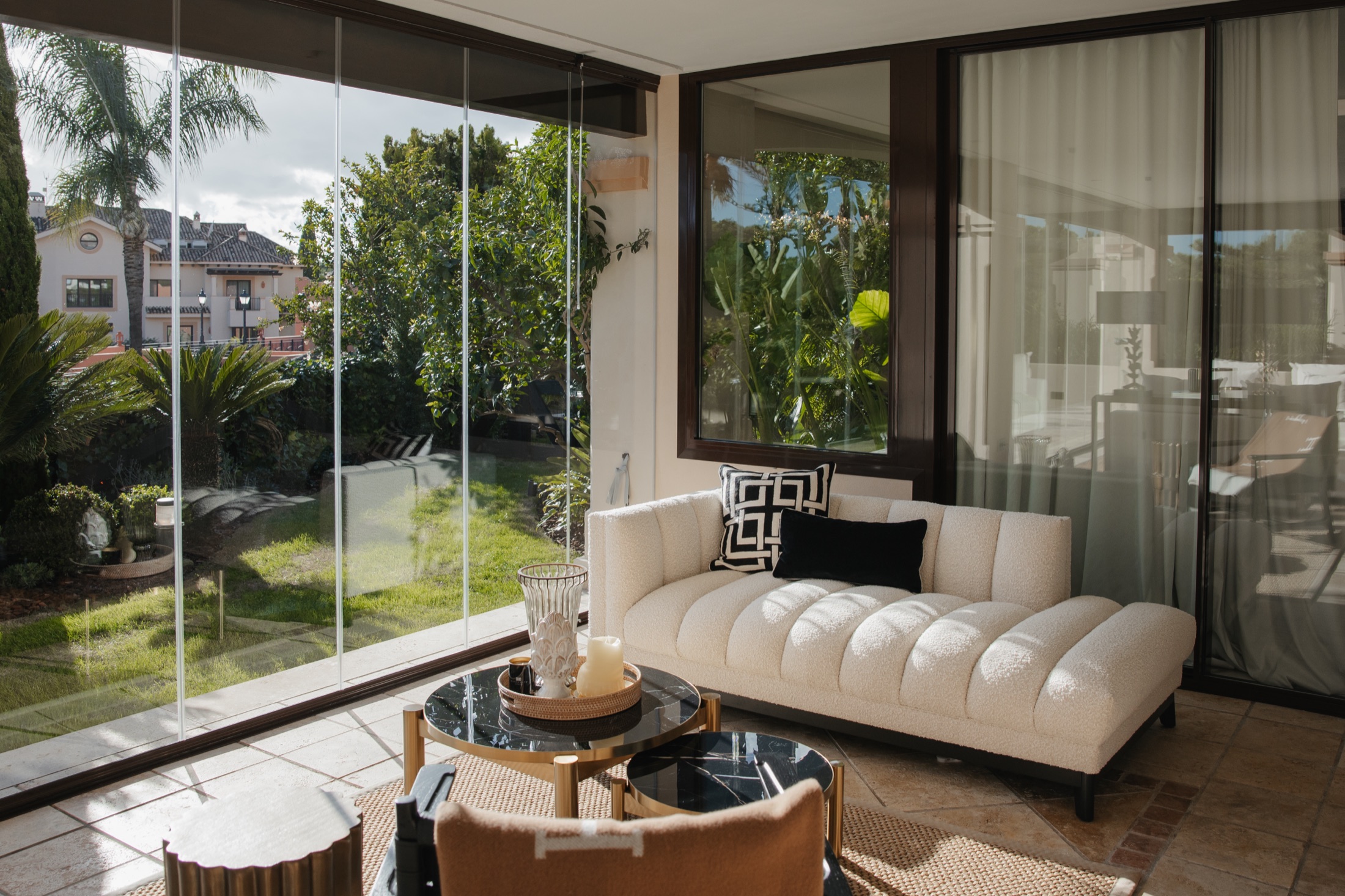
The most convincing Mediterranean homes make it hard to say exactly where the interior ends. That effect comes from a few deliberate moves: large sliding or pocketing glass walls that disappear into the wall, floor levels that run flush from the living room straight onto the terrace with no step or lip, and — the detail that does the most work — the same or a closely matched floor material used on both sides of the glass. When the stone underfoot doesn't change at the threshold, the eye reads one continuous space and the terrace becomes an extension of the living room rather than a separate zone you step out to. It's the same principle we covered inside the house in our 2026 trends piece, applied to the boundary itself — and it only works if the interior and exterior are detailed together, because the flush threshold and drainage that make it possible are decided long before the flooring is laid.
Choose Materials the Coast Won't Destroy
Outdoors, material choice is really durability engineering dressed as design. Natural stone and large-format porcelain that stay relatively cool and slip-resistant underfoot, teak and other stable hardwoods that silver gracefully instead of warping, powder-coated aluminium and stainless fixings that resist salt corrosion, and genuine outdoor-grade upholstery and rugs built for UV and damp — these are what separate a terrace that still looks considered after five summers from one that doesn't. Two mistakes recur: using an indoor material outdoors because it matched the mood board, and under-specifying metals near the sea. Coastal salt air is unforgiving; marine-appropriate stainless grades and finishes are not a detail to leave to chance, and neither is how a stone behaves barefoot at forty degrees.
The Pool and Water as Part of the Composition
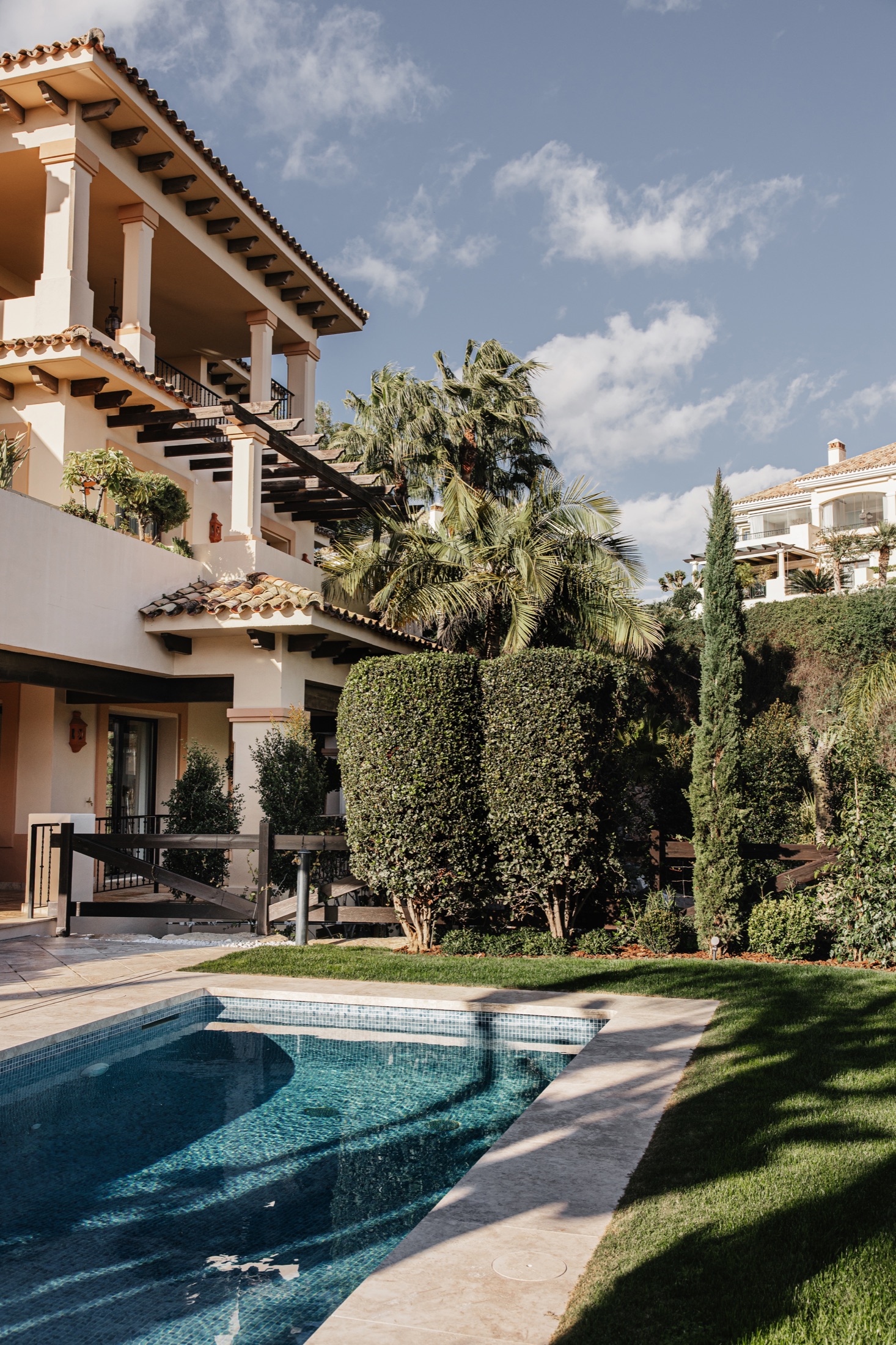
Where there's a pool, it's the anchor the rest of the terrace is composed around, not a separate contract that happens nearby. Its position sets sightlines from inside the house, its coping and surround have to be safe wet and comfortable barefoot in full sun, and its finish colour changes the character of the whole garden. Water also does something for comfort that's easy to underrate — the sound and the evaporative cool of a pool or a quiet water feature make a hot terrace feel calmer. Designed as part of the composition, the pool ties the garden, the terrace and the house together; bolted on afterwards, it competes with them.
Design the Outdoor Room in Full
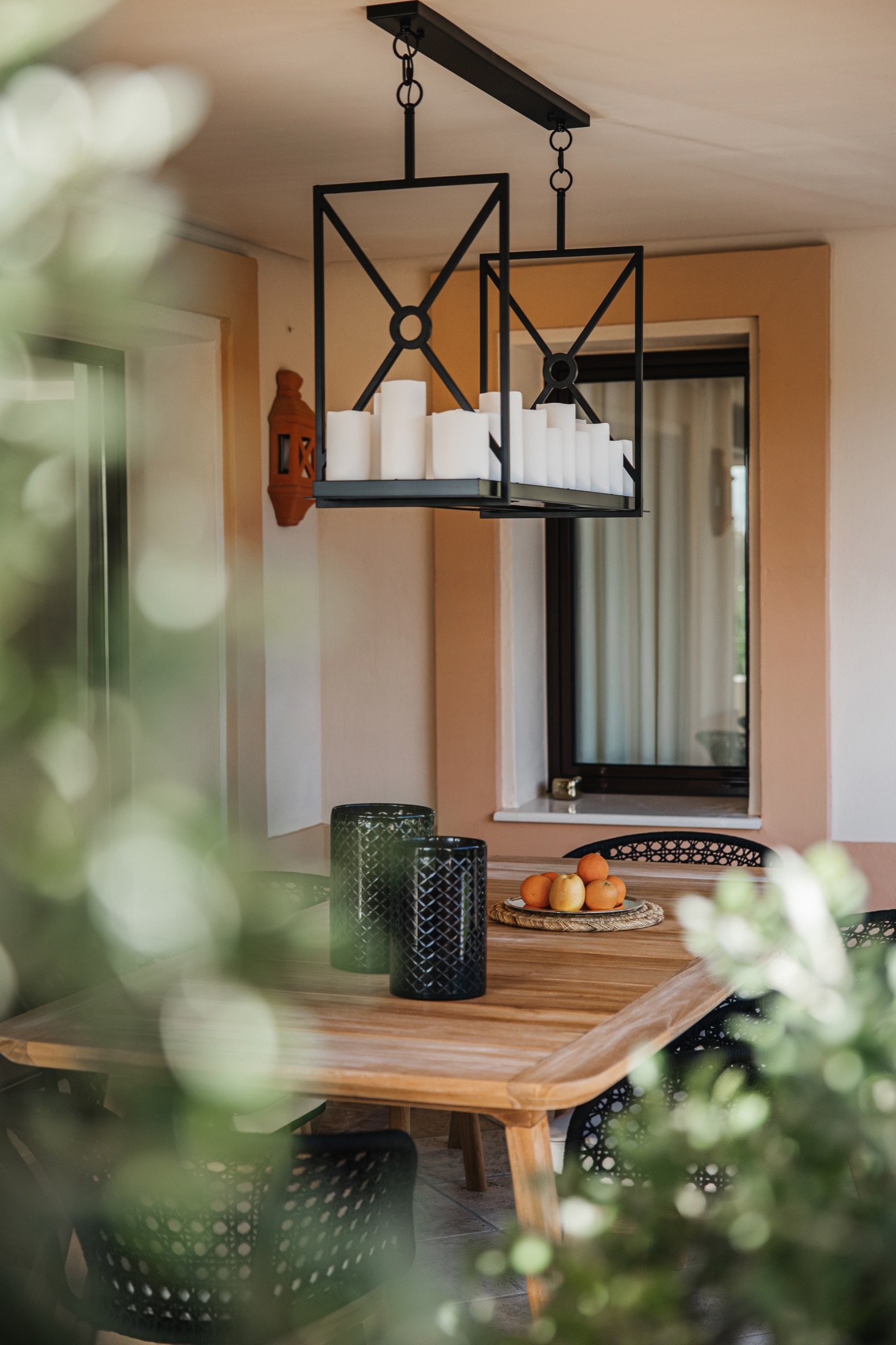
A terrace earns its place when it's programmed like an interior: a defined dining area, a comfortable lounge, often an outdoor kitchen or bar, and considered circulation between them and the pool. Each carries its own requirements — an outdoor kitchen needs water, power, gas and ventilation planned early, a lounge needs the same attention to proportion and comfort as one indoors, and the routes between zones need to feel natural rather than left over. Treated as one composition rather than a scattering of furniture on a slab, the space reads as part of the home instead of a patio the furniture happened to land on.
Privacy, Enclosure and the Right Amount of Shelter
An outdoor room only gets used if it feels private and sheltered enough to relax in. On overlooked plots that means designing enclosure deliberately — layered planting, screens, built-in seating with tall backs, or a change of level that lifts a terrace out of a neighbour's sightline — without walling the space in so tightly it loses the view and the breeze that made it worth having. The judgement is in the balance: enough shelter from wind and eyes to be comfortable, enough openness to still feel like outdoor living.
Plant for the Place
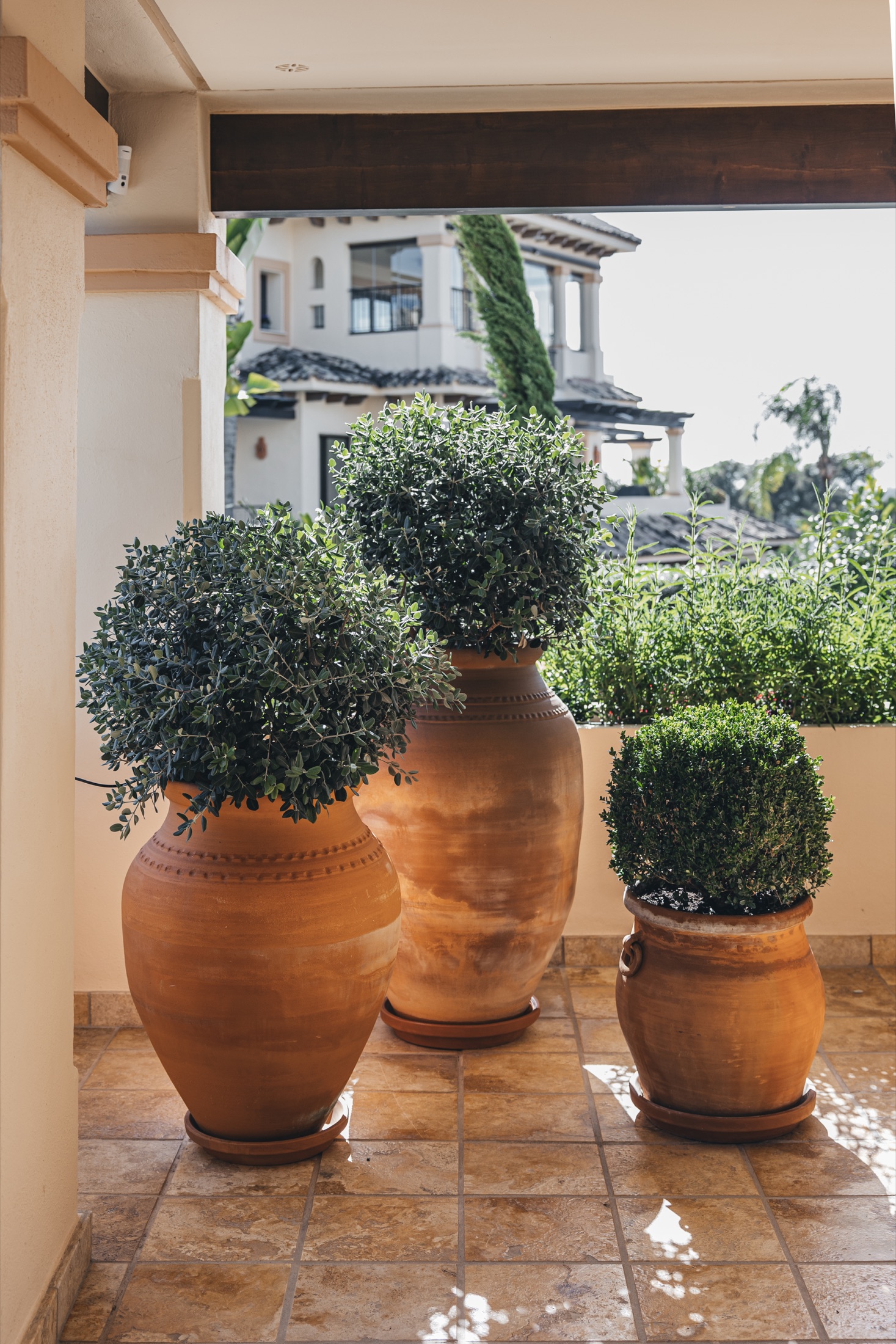
Mediterranean and drought-tolerant planting — olive, cypress, lavender, ornamental grasses, mature palms — belongs here both because it thrives with less water in a region where that matters and because it looks native to the setting rather than imported into it. Planting is also the fastest way to soften new hard landscaping and to create the shade, privacy and sense of enclosure the sections above depend on. Specifying a few mature specimens rather than waiting years for small ones to fill in is often what makes a finished terrace feel established from the first season.
Light It for the Evening
Because so much outdoor living here happens after sunset, lighting is designed as its own layer rather than switched on as an afterthought: low, warm, and glare-free, washing walls and planting, grazing texture, and marking steps and level changes for safety. Done well it lets the terrace stay as inviting at ten in the evening as it is at noon, and extends the hours the space is actually used — which, given the climate, is much of the point.
Furnish for Weather, Not Just for the Photo
Outdoor furniture has to survive what the terrace survives. That means frames and fixings chosen for salt and UV, cushions in true outdoor performance fabrics with foam that drains and dries, and pieces heavy or anchored enough not to travel in a gust — without giving up the comfort and proportion that make people actually sit down. Somewhere to store or cover soft furnishings through the wettest weeks extends their life considerably. The aim is furniture that looks as intentional as the interior's and holds up to a climate the interior never sees.
Design for the Whole Year, Not Just August
The best terraces on the coast are planned for the shoulder seasons, because that's when the extra usable months are won or lost. Adjustable shade for spring and autumn, some protection or discreet heating for cooler evenings, materials that don't turn cold and slick in a January shower, and a layout that works for two people with coffee as well as twelve for dinner — these are what turn a summer-only patio into a space earning its keep most of the year. It's the difference between designing for a photograph and designing for a life lived largely outdoors.
One Team, Inside and Out
Outdoor space is where fragmented projects tend to fall apart — the interior designer stops at the glass, a separate landscaper takes the garden, and a third party pours the terrace, with no one owning the transition between them. Because Brunello by Kats handles architecture, interior design, construction and furnishing under one roof, the inside and the outside are designed as a single continuous project — the flush threshold, the matched flooring, the shade structure, the pool surround and the planting all resolved by one team rather than negotiated across three after the fact.
Get in Touch
If you're planning a terrace, garden, pool or full outdoor renovation on the Costa del Sol and want it designed for the climate rather than in spite of it, get in touch with our team — we can walk through orientation, materials, shade and how your outdoor space should connect to the home it belongs to.